


Weight loss
Retatrutide explained.
A triple receptor agonist. What that means and how it differs from the better-known GLP-1 agents.
Retatrutide is a synthetic peptide that acts on three receptors at once: GLP-1, GIP and the glucagon receptor. That sets it apart from agents that act on one or two receptors.
The three routes
GLP-1 and GIP are incretins, hormones released by the gut after a meal that influence the insulin response. They work through different receptors but in the same system.
The glucagon receptor is the notable third. Glucagon is known as the counterpart of insulin, but research also links it to energy expenditure in liver and fat tissue. It is that combination that makes Retatrutide interesting as a research subject.
Difference from single agonists
A GLP-1 agonist acts on one receptor. A dual agonist adds GIP. Retatrutide adds the glucagon route to that. The literature looks at whether that stacked action gives different outcomes than the sum of the separate routes.
Research into triple agonists is younger than that into single ones, and is ongoing.
Form and amounts
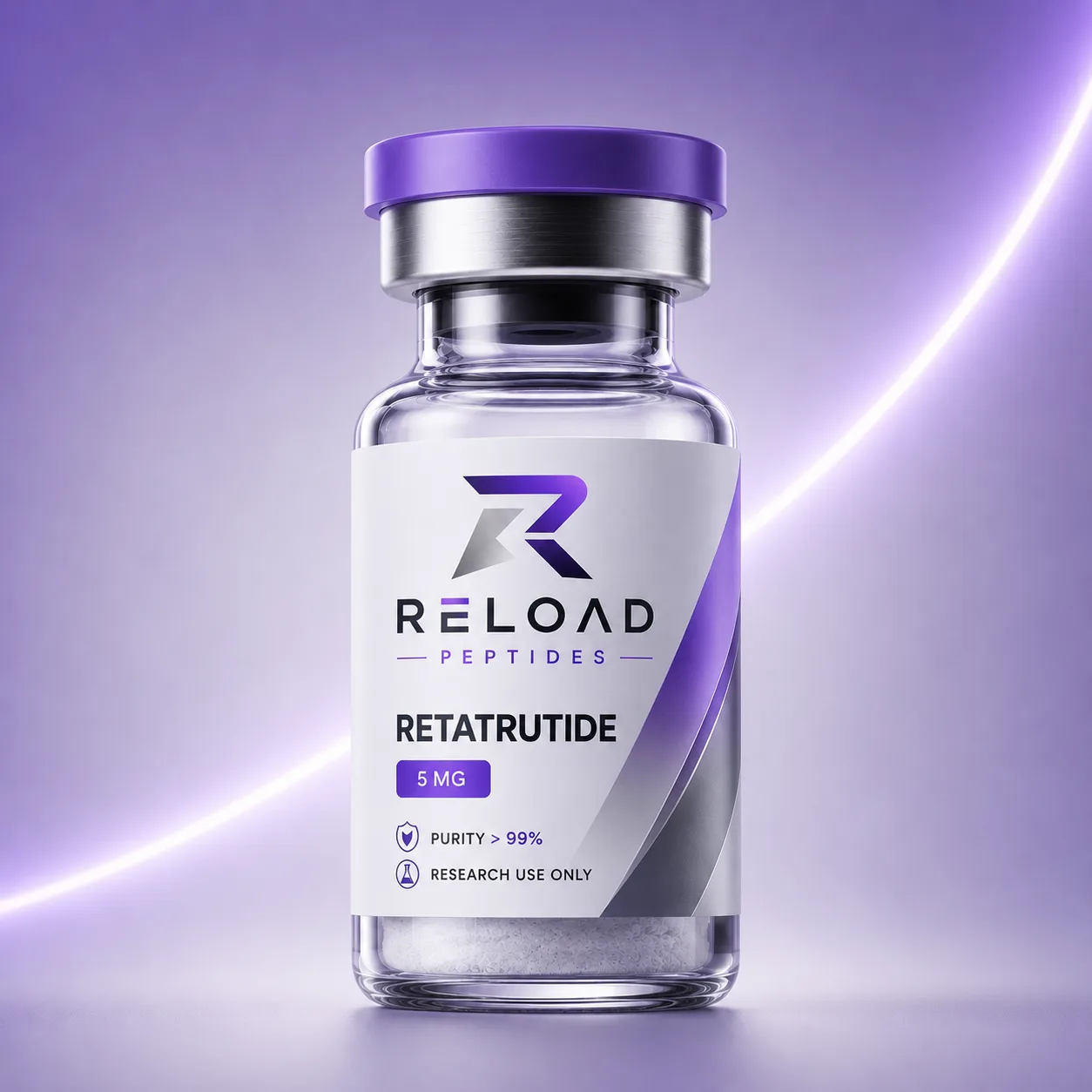
We supply Retatrutide freeze-dried in a sealed vial, from 5 to 60 mg. You reconstitute with bacteriostatic water.
The price per mg drops sharply as the vial gets larger: from almost 14 euros per mg for the smallest to just over 4 euros per mg for the largest. Look at the variants side by side before you choose.
Read on: glp-1 peptides explained.
Products from this article
- Weight loss