


Accessories
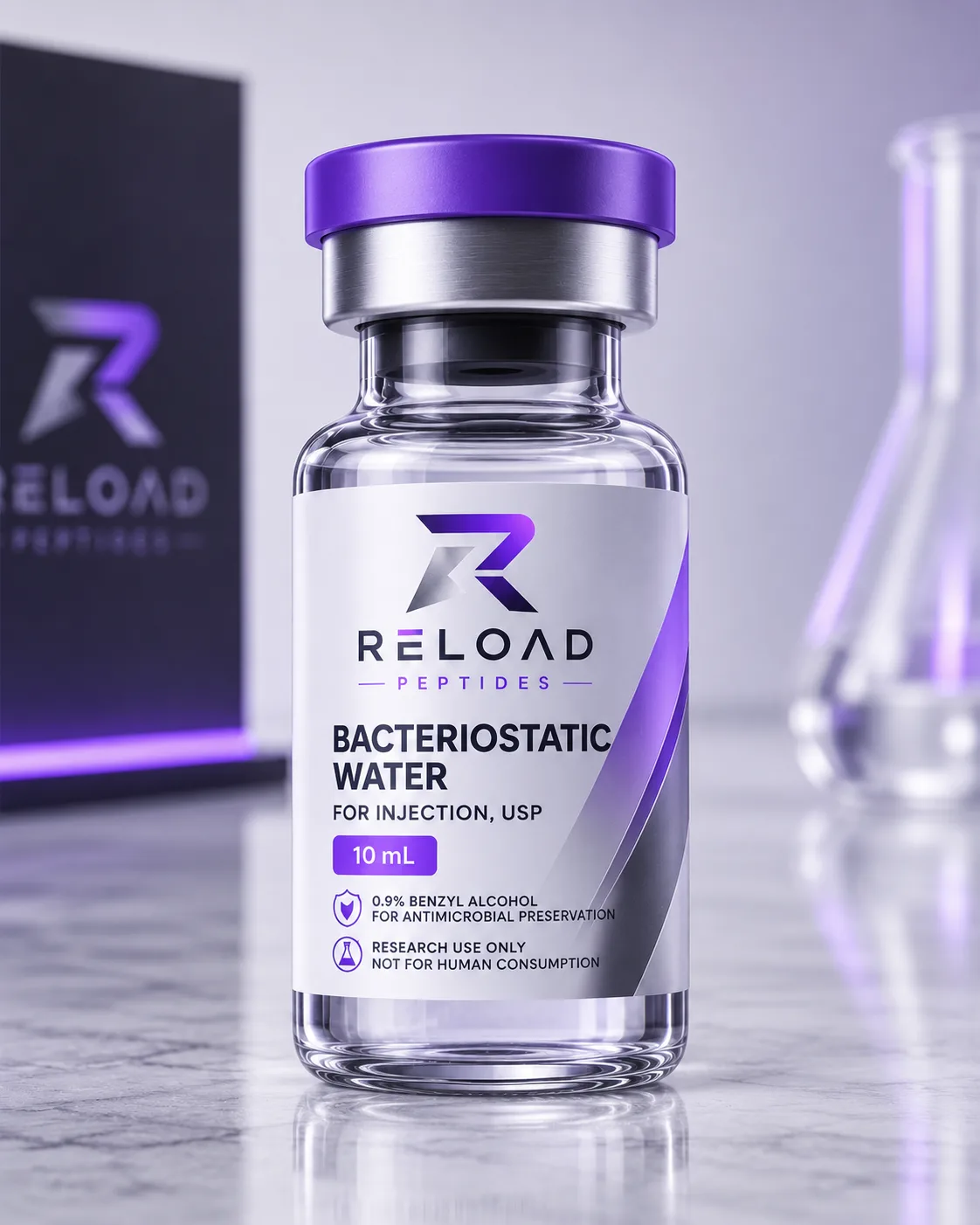
Bacteriostatic water.
Why it is the standard solvent, how much you need and when to use something else.
Bacteriostatic water is sterile water with 0.9 percent benzyl alcohol. That addition does not kill bacteria but inhibits their growth, so a pierced vial stays usable longer than with plain sterile water.
Difference from sterile water
Sterile water contains nothing extra. As soon as you pierce the vial the sterility is gone and whatever gets in can multiply. Sterile water is therefore meant for single use.
Bacteriostatic water is meant for multiple piercings. That makes it the logical choice for a vial you work from several times.
How much you need
That depends on the concentration you want. More water means a lower concentration and thus a larger volume per measured amount, which allows more accurate measuring. Less water means a higher concentration and a longer shelf life of the bottle.
As a rule of thumb, one 10 ml bottle covers two to three vials. Use the calculator to work out exactly what a chosen volume means for the concentration.
Dissolving without damage
- Let the vial reach room temperature first.
- Clean the rubber stopper with an alcohol wipe.
- Let the water run down the wall of the vial, not straight onto the powder.
- Tilt or roll the vial gently. Do not shake, because foam damages the chain.
- Wait until the powder is fully dissolved before you measure anything.
When to use acetic acid water
Some peptides dissolve poorly at a neutral pH. Diluted acetic acid lowers the pH and helps those compounds go into solution. It is not a replacement but an addition for specific cases. If in doubt, start with bacteriostatic water.
Read on: peptide calculator.
Products from this article
- Accessories